The Mechanisms of Skin Aging: 4 Key Changes That Occur in the Skin and Face With Age
Skin aging begins with a decline in collagen production and a gradual slowdown in skin cell renewal, and progresses to the loss of facial fat and underlying bone structure.
Why does skin gradually lose the youthful, smooth, and even appearance it once had? Why do lines that were once visible only when smiling or making facial expressions gradually become noticeable even at rest? And why can the skin sometimes appear drier, looser, or duller despite regular use of moisturizers?
The answer cannot be found at the skin's surface alone.
Skin aging is a complex, multilayered process that affects not only the skin, but also the underlying fat, the structural support of the face, and even the facial bones. As a result, the changes we see in the mirror—such as wrinkles, sagging, volume loss, or changes in skin quality—are actually the visible consequences of a series of biological changes occurring deeper within the tissues. (PubMed)
In this article, we explore four key scientific changes that occur during the aging process of the skin and face.
What Is Skin Aging?
Skin aging can broadly be divided into two main categories: intrinsic aging and extrinsic aging.
Intrinsic aging is a natural part of growing older and is associated with gradual changes in skin cells, connective tissue, and the overall structure of the skin. In contrast, environmental factors—particularly exposure to ultraviolet (UV) radiation—can accelerate and intensify this process. This form of aging is known as photoaging. Smoking, air pollution, and certain lifestyle factors may also contribute to premature skin aging. (PubMed)
As a result, two people of the same age may have significantly different skin appearances.
Secret One: Facial Aging Is Not Just About the Skin
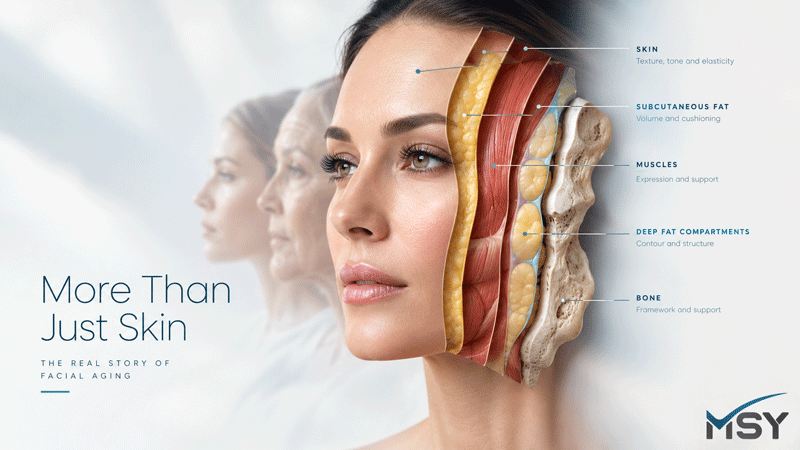
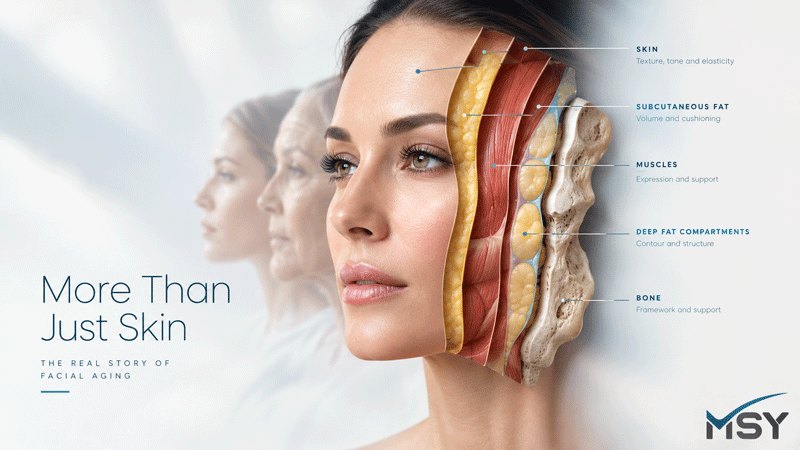
One of the most important shifts in our scientific understanding of facial aging is recognizing that the face is not simply a layer of skin.
The face is composed of multiple layers and tissues, ranging from the skin and subcutaneous fat to muscles, deep fat compartments, and underlying skeletal structures. With age, changes in each of these components can influence the appearance and position of the surrounding tissues. (PubMed)
Skeletal Changes
The facial bones also undergo age-related bone remodeling and resorption. These structural changes can affect the shape and support of the facial soft tissues in certain areas. Therefore, some of the changes in facial contour that occur with age are not simply the result of skin laxity.
(PubMed)
Changes in Facial Fat During Skin Aging
Facial fat is not a single, uniform mass; rather, it is distributed across multiple superficial and deep fat compartments. With age, the volume and position of some of these compartments change, which can affect cheek volume, facial grooves, and overall facial contour. (PubMed)
For this reason, the traditional view that facial aging is simply the result of “skin sagging caused by gravity” is no longer considered a complete explanation of the aging process.
Secret Two: Collagen and Elastin Change
If we were to choose two key terms to explain the structure of the skin, collagen and elastin would be at the center of the discussion.
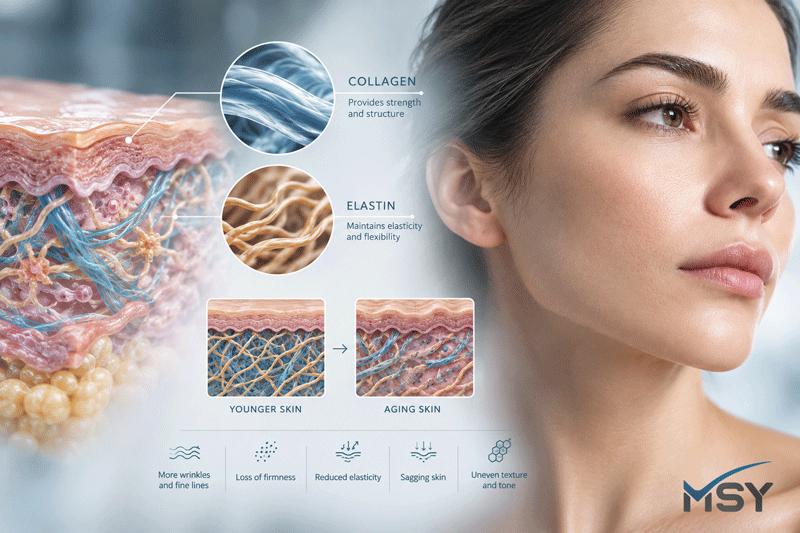
Collagen is one of the primary structural proteins in the skin and plays a critical role in maintaining the strength and architecture of the dermis. Elastin, meanwhile, is essential for the skin’s elastic properties. With age, both the quantity and organization of these extracellular matrix components change, contributing to a gradual decline in skin strength and elasticity. (PubMed)
Research suggests that dermal collagen content declines progressively during adulthood. However, this should be understood as an approximate trend rather than a fixed annual rate. The rate of collagen loss is not linear and can be influenced by age, hormonal changes, individual characteristics, and exposure to environmental factors. For example, collagen loss may accelerate around menopause. (PubMed Central)
This process does not simply mean that “collagen disappears.” The issue involves more than reduced collagen production. Changes in the quality, organization, and degradation of collagen and elastin are also important.
In aging skin, collagen fibrils become increasingly fragmented and disorganized. These structural changes can compromise the integrity and mechanical properties of the skin.
Collagen Fragmentation
In young skin, collagen fibers are generally long, relatively continuous, and well interconnected. With aging—and particularly with chronic exposure to UV radiation—the following process can occur:
UV exposure → increased ROS → increased MMP activity → collagen degradation → collagen fiber fragmentation
In other words, larger, continuous collagen structures become progressively fragmented into shorter segments. This fragmentation disrupts the organization of the dermal extracellular matrix and contributes to the loss of structural support within the skin.
Changes in Facial Fat During Skin Aging
Facial fat is not a single, uniform mass; rather, it is distributed across multiple superficial and deep fat compartments. With age, the volume and position of some of these compartments change, which can affect cheek volume, facial grooves, and overall facial contour. (PubMed)
For this reason, the traditional view that facial aging is simply the result of “skin sagging caused by gravity” is no longer considered a complete explanation of the aging process.
Secret Two: Collagen and Elastin Change
If we were to choose two key terms to explain the structure of the skin, collagen and elastin would be at the center of the discussion.
Collagen is one of the primary structural proteins in the skin and plays a critical role in maintaining the strength and architecture of the dermis. Elastin, meanwhile, is essential for the skin’s elastic properties. With age, both the quantity and organization of these extracellular matrix components change, contributing to a gradual decline in skin strength and elasticity. (PubMed)
Research suggests that dermal collagen content declines progressively during adulthood. However, this should be understood as an approximate trend rather than a fixed annual rate. The rate of collagen loss is not linear and can be influenced by age, hormonal changes, individual characteristics, and exposure to environmental factors. For example, collagen loss may accelerate around menopause. (PubMed Central)
This process does not simply mean that “collagen disappears.” The issue involves more than reduced collagen production. Changes in the quality, organization, and degradation of collagen and elastin are also important.
In aging skin, collagen fibrils become increasingly fragmented and disorganized. These structural changes can compromise the integrity and mechanical properties of the skin.
Collagen Disorganization
Here, the issue is that the spatial arrangement and architecture of the collagen network become less organized.
In young skin, collagen fibers are generally:
More organized
Properly interconnected
Arranged within a cohesive three-dimensional network
With aging and photoaging:
Collagen fragmentation + altered ECM remodeling → collagen network disorganization
On histological examination, this may appear as irregular, dispersed collagen fibers with less coherent orientation.
What Are the Effects of Collagen Loss?
At the visible level, these changes may manifest as:
Increased fine lines and wrinkles
Reduced skin firmness
Decreased elasticity
Increased skin laxity
Changes in skin texture and overall quality
(American Academy of Dermatology)
Therefore, when we talk about skin aging, we are not simply talking about a line appearing on the face. We are describing a gradual alteration in the architecture and organization of the tissue.
Secret Three: Skin Texture and Pore Appearance Change
Another visible sign of facial skin aging is a change in skin texture and pore appearance.
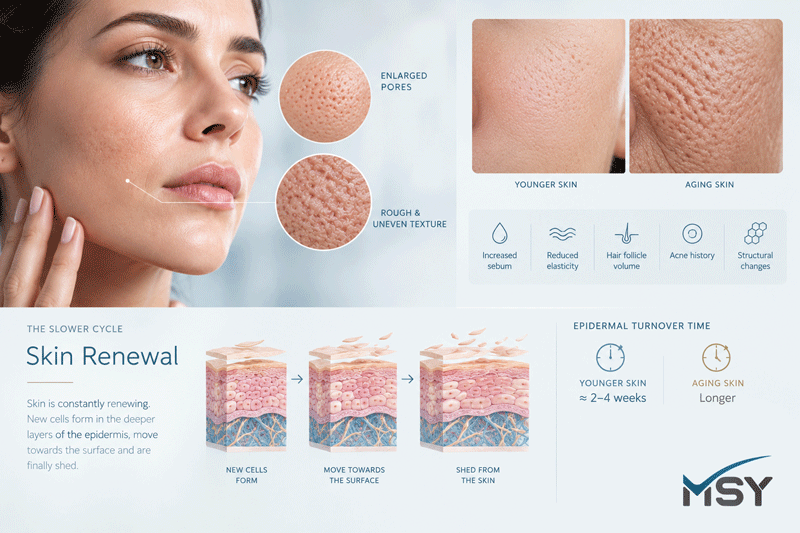
Enlarged or more visible pores generally do not have a single underlying cause. Increased sebum production, reduced elasticity around the pores, hair follicle size, a history of acne, and other structural characteristics of the skin can all contribute to increased pore visibility. (PubMed)
On the other hand, research suggests that age-related changes in the fibrous network surrounding the pilosebaceous units and pores may also contribute to reduced structural support in this area. (PubMed)
As a result, with increasing age, the skin may appear rougher, less even, and less radiant, in addition to developing wrinkles.
It is important to clarify that “skin pores” are not structures that simply open and close. What we see clinically is largely related to the apparent size and prominence of the follicular openings, as well as the condition and structural support of the surrounding tissue.
Secret Four: The Skin Renewal Cycle Slows Down
The skin is constantly renewing itself. New cells are formed in the deeper layers of the epidermis, gradually migrate toward the surface, and are eventually shed as part of the natural exfoliation process.
This process is known as epidermal turnover, or the epidermal renewal cycle.
However, this cycle does not have a fixed duration for everyone or for every area of the body. Studies have shown that epidermal turnover time varies depending on the anatomical site and the method used to measure it. With increasing age, the rate of skin renewal also tends to slow down. Some sources have reported an epidermal renewal time of approximately 28 days in younger adults, increasing to around 40–60 days or longer in older individuals, although the exact duration varies between studies and individuals. (PubMed)
As this process slows, changes can occur in the thickness and function of the epidermis, as well as in the skin’s ability to maintain its structure and repair itself effectively. As a result, aging skin may appear duller, thinner, and drier. (PubMed)
Therefore, rather than focusing on a single fixed number for the “skin renewal cycle,” it is more important to understand the underlying principle:
With age, the natural rate of skin renewal and repair gradually declines.
Why Does It Sometimes Feel Like Moisturizer No Longer Works as Well as It Used To?
This is an important point to clarify.
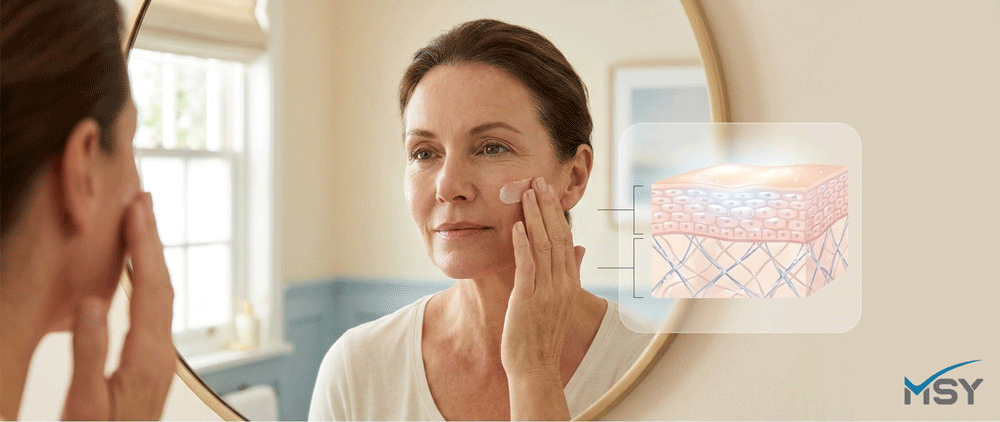
Moisturizers can still be beneficial for maintaining skin hydration and reducing the appearance of fine lines. Increasing the hydration of the stratum corneum can temporarily make the skin appear smoother, softer, and more radiant. (American Academy of Dermatology)
However, a moisturizer cannot reverse all of the structural changes associated with aging.
Skin aging is not simply a matter of dehydration. It involves a combination of changes affecting collagen, elastin, the epidermis, facial fat, and other underlying structures. Therefore, a product may be highly effective at improving hydration while still being unable, on its own, to correct deeper structural changes associated with aging. (PubMed)
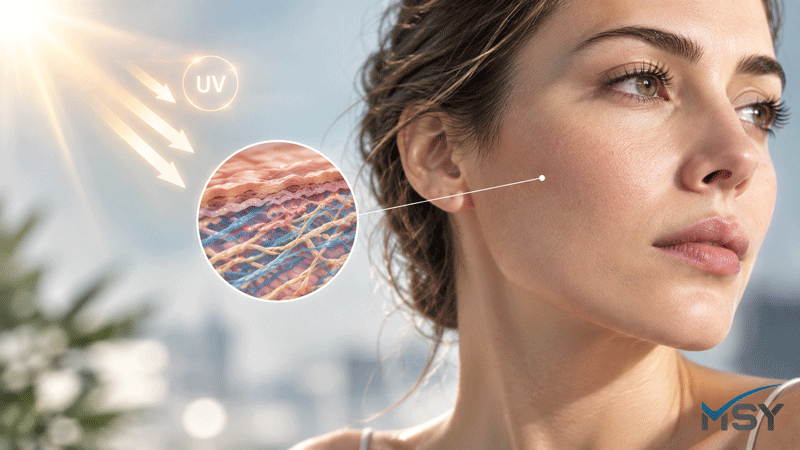
What Role Does Sunlight Play in Skin Aging?
If we were to highlight a single environmental factor that plays a major role in premature skin aging, ultraviolet (UV) radiation would be particularly important.
UV exposure can damage skin structures and, through increased oxidative stress and alterations in the extracellular matrix, accelerate collagen degradation and disrupt the organization of elastin fibers. This process is known as photoaging. (PubMed)
For this reason, dermatologists consider sun protection one of the fundamental components of an anti-aging skin-care routine. The American Academy of Dermatology also recommends daily use of a broad-spectrum sunscreen with an appropriate SPF to help reduce UV-related skin damage. (American Academy of Dermatology)
Does Everyone Age in the Same Way?
No.
The process of skin aging varies from person to person and is influenced by multiple factors, including genetics, age, hormonal changes, sun exposure, lifestyle, and environmental conditions.
Even within the same face, different areas do not necessarily age at the same rate. The underlying skeletal structures, fat compartments, muscles, and skin may each undergo distinct patterns of age-related change. (PubMed)
Therefore, a scientific understanding of facial aging should be multilayered and individualized, rather than attributing all visible changes to a single cause.
Conclusion: What We See in the Mirror Is Not the Whole Story
When we see a line, wrinkle, or area of sagging in the mirror, we are actually seeing the final visible result of a series of underlying changes.
Skin aging can result from the simultaneous interaction of multiple processes:
Changes in facial structure → alterations in fat compartments → reduction and structural changes in collagen and elastin → epidermal changes → slower skin renewal → cumulative effects of environmental factors such as UV exposure
Therefore, to truly understand skin aging, we need to move beyond a purely superficial perspective and consider the overall architecture of the skin and face.
Modern aesthetic medicine begins from this very point: understanding structure, recognizing age-related changes, and making evidence-based decisions.
One sentence to remember:
Skin does not simply “age”; the structure of the skin and face changes over time.
What we see in the mirror is the visible outcome of these layered, interconnected changes.
Appropriate aesthetic interventions, including mesogel-based treatments when clinically indicated, may support skin hydration and quality and can be considered as part of a personalized approach to managing age-related skin changes.
Frequently Asked Questions About Skin Aging
At What Age Does Skin Aging Begin?
Skin aging is not a sudden event. Cellular and structural changes occur gradually throughout adulthood, with their timing and severity varying from person to person. A gradual decline in collagen during adulthood has also been reported in various studies. (PubMed Central (PMC))
Does Skin Aging Only Cause Wrinkles?
No. Wrinkles are only one visible sign of skin aging. Reduced elasticity, changes in skin texture, dryness, changes in facial volume, and alterations in facial fat and deeper structural tissues can also contribute to changes in facial appearance. (PubMed)
Why Do Pores Become More Visible With Age?
Reduced elasticity around the pores is one factor associated with increased pore visibility. However, sebum production, hair follicle characteristics, and a history of acne can also contribute. Therefore, enlarged or more visible pores are not necessarily a direct sign of aging alone. (PubMed)
Can Moisturizer Prevent Skin Aging?
Moisturizers can help maintain skin hydration and temporarily improve the appearance of fine lines. However, they cannot stop or reverse all of the structural and deeper changes associated with aging. (American Academy of Dermatology)